Maybach: Between Glory and a Turning Point

The new Mercedes-Maybach S-Class is far more than a carefully polished update of a familiar ultra-luxury limousine. It arrives at a moment when Mercedes is sharpening the very top of its portfolio, comprehensively modernizing the S-Class and expanding Maybach into a distinct luxury universe that now stretches from chauffeur-driven saloon to electric SUV and exclusive roadster. That is precisely why this model matters. The new Maybach is meant to feel more digital, more individual and more visibly luxurious, while still preserving the essence that made the name so powerful in the first place: serenity, space, comfort and ceremonial presence.
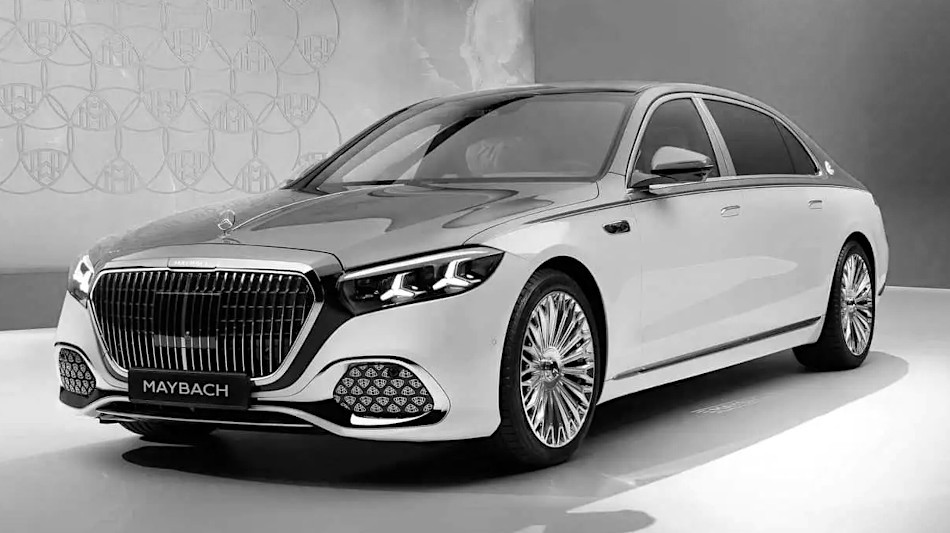
Its exterior already makes that ambition unmistakable. The limousine remains an imposing figure at roughly 5.48 meters in length, yet the revised design pushes its presence even further. The grille grows larger, light becomes a central design instrument, Maybach insignia and other elements take on a more theatrical role, and new wheel designs sharpen the visual stance. Even smaller details, such as projected lettering when entering the car or rose-gold accents inside the headlamps, underline the idea that luxury here is not merely owned but staged. Buyers who prefer a darker, more dramatic interpretation still have that option as well. This is not design built around understatement. It is design built around effect.
Inside, Mercedes makes its 2026 understanding of luxury even clearer. The new Mercedes-Maybach S-Class adopts the sweeping Superscreen layout, introduces MB.OS to a Maybach model and combines digital sophistication with a deliberate emphasis on tactile richness. The rear compartment remains the true centerpiece. Executive seating, chauffeur-oriented comfort, generous legroom, larger rear displays and a long list of comfort details create the impression of a private lounge on wheels rather than a conventional car cabin. At the same time, Maybach is moving toward a broader definition of exclusivity. Most telling is the availability of a leather-free interior using linen and recycled polyester. It signals that premium craftsmanship is no longer tied exclusively to traditional opulence, but increasingly to material intelligence, sensory quality and curated individuality.
The real break, however, happens under the skin. In Europe, the regular V12 disappears from the Maybach offer, and that decision cuts straight into the emotional core of the model. A revised V8 takes over as the flagship engine in the European configuration. From a rational point of view, the move reflects regulation, efficiency pressures and a broader technical realignment. Symbolically, though, it means much more. For many buyers and observers, the V12 was never just an engine. It was a marker of absolute exception, a silent signature of untouchable status. The fact that the twelve-cylinder continues in other markets only makes the European shift feel more profound. The new powertrain may be modern, strong and refined, but in the Maybach sphere mythology matters almost as much as mechanical performance.
That is also why pricing remains such a central part of the conversation. Official German entry prices for the freshly revised Maybach S-Class have not yet been published. That silence adds suspense, because Maybach already occupies a price universe that clearly shows how deliberately Mercedes positions the brand above the ordinary luxury market. The outgoing version had recently sat at roughly 184,000 to nearly 240,000 euros depending on the powertrain. The broader Maybach line makes the strategy even clearer. The GLS, the EQS SUV and the new SL Monogram Series prove that Maybach is no longer a single extravagant derivative of the S-Class but an entire high-priced family of luxury products. The two-seat SL, in particular, signals that the brand is no longer focused only on rear-seat grandeur, but also on emotional exclusivity and image-driven desirability.
Public reaction reflects exactly this tension. Admirers praise the craftsmanship, the silence, the rear-seat comfort and the unapologetic status statement. To them, the new Maybach is a convincing answer to what automotive luxury should look like today: not modest, but deliberately extraordinary. Critics, however, argue that Mercedes is increasingly charging not just for engineering and comfort, but also for image, symbolism and badge value. Added to that are broader concerns about the brand’s pricing logic, a sense of growing opacity and a design language that some read as majestic while others see as excessive. The larger grille, illuminated emblems and star-based light graphics have become talking points in their own right. Most emotionally charged of all is the loss of the V12 in Europe. For many, that is not simply an engine change. It feels like the end of a prestige promise.
From Mercedes’ perspective, though, the direction is perfectly clear. Maybach is not a decorative fringe project. It is a strategically important pillar within the top-end segment. The new Mercedes-Maybach S-Class therefore arrives not as an exercise in nostalgia, but as a future-facing flagship: more digital, more personalized, more globally tuned and, inevitably, more polarizing. That is exactly its purpose. It does not need to appeal to everyone. It needs to become irresistible to a very specific clientele. And for that reason, despite all the debate around price, style and engine culture, it remains one of the defining luxury limousines of the present moment.