Deadly blast hits mosque in Alawite area of Syria's Homs / Photo: Omar HAJ KADOUR - AFP

An explosion killed at least eight worshippers at a mosque in a predominantly Alawite area of Syria's Homs on Friday, state media said, with an Islamist militant group claiming responsibility.
The attack during Friday prayers is the latest on the Alawite community, and the second blast in a place of worship since Islamist authorities took power a year ago, after a suicide bombing in a Damascus church killed 25 people in June.
In a statement on Telegram, extremist group Saraya Ansar al-Sunna said its fighters "detonated a number of explosive devices" in the Imam Ali Bin Abi Talib Mosque in the central Syrian city.
The group formed after the ouster last year of longtime ruler Bashar al-Assad, himself a member of the Alawite community, and had claimed responsibility for the June church bombing, though authorities blamed the Islamic State group.
State news agency SANA reported an explosion in the mosque in Homs's Wadi al-Dahab neighbourhood and gave a preliminary toll of at least eight dead and 18 wounded, citing a health ministry official.
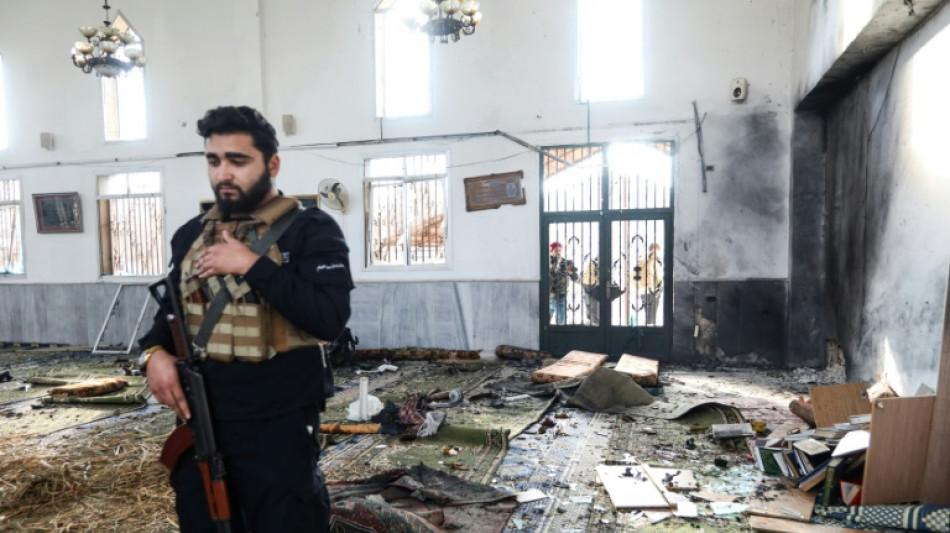
An AFP photographer saw security forces cordoning off the area around the mosque while inside, personnel stood guard as red tape encircled the blackened, debris-strewn corner where the blast went off.
Usama Ibrahim, 47, who was being treated in hospital for shrapnel wounds to his head and back, said he was at Friday prayers when he heard was a loud explosion.
"The world turned red... and I fell to the ground. Then I saw blood flowing from my head," he told AFP.
- 'Shrapnel all around' -
Syria's interior ministry said in a statement that "a terrorist explosion" targeted the mosque and that authorities had "begun investigating and collecting evidence to pursue the perpetrators of this criminal act".
SANA quoted a security source as saying that initial investigations indicated that "explosive devices planted inside the mosque" caused the blast.
As victims' families gathered at the hospital, wounded bookseller Ghadi Maarouf, 38, told AFP that the explosion occurred "just before the imam was to ascend the minbar to deliver the sermon", referring to the imam's raised platform.
"It was a huge explosion, and I saw shrapnel flying all around me," said Maarouf, whose leg was wounded in the blast.
Syria's foreign ministry condemned a "cowardly criminal act", saying it came "in the context of repeated desperate attempts to undermine security and stability and spread chaos among the Syrian people".
The ministry statement reiterated its "firm stance in combating terrorism in all its forms", vowing to hold the attackers accountable.
Several countries including Saudi Arabia, Lebanon, Turkey and Jordan condemned the attack.
Most Syrians are Sunni Muslim, and Homs city is home to a Sunni majority but also has several predominantly Alawite areas, a community whose faith stems from Shiite Islam.
Since Assad's fall, the Syrian Observatory for Human Rights monitor and Homs province residents have reported kidnappings and killings targeting members of the minority community, while the country has seen several bloody sectarian episodes.
- Detainees released -
Syria's coastal areas saw the massacre of Alawite civilians in March, with authorities accusing armed Assad supporters of sparking the violence by attacking security forces.
A national commission of inquiry said at least 1,426 members of the minority were killed, while the Syrian Observatory for Human Rights monitor put the toll at more than 1,700.
Late last month, thousands of people demonstrated on the coast in protest at fresh attacks targeting Alawites in Homs and other regions.
Before and after the March bloodshed, authorities carried out a massive arrest campaign in predominantly Alawite areas, which are also former Assad strongholds.
On Friday, Syrian state television reported the release of 70 detainees in the coastal city of Latakia "after it was proven that they were not involved in war crimes", saying more releases would follow.
Despite assurances from Damascus that all Syria's communities will be protected, the country's minorities remain largely wary of their future under the new Islamist authorities.
In July, sectarian clashes in southern Syria's Druze-majority Sweida province saw more than 2,000 people killed, including hundreds of Druze civilians who the Observatory said were "summarily executed by defence and interior ministry personnel".
In a speech this month marking a year since the fall of Assad, Syrian President Ahmed al-Sharaa emphasised the importance of all Syrians unifying efforts to "to build a strong Syria".
Despite major achievements in relaunching Syria's foreign standing, Sharaa faces the major domestic challenge of maintaining security and unity nationwide.
F.Gonzalez--BT