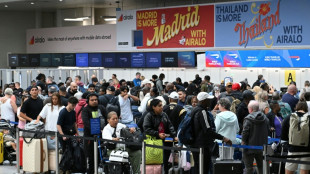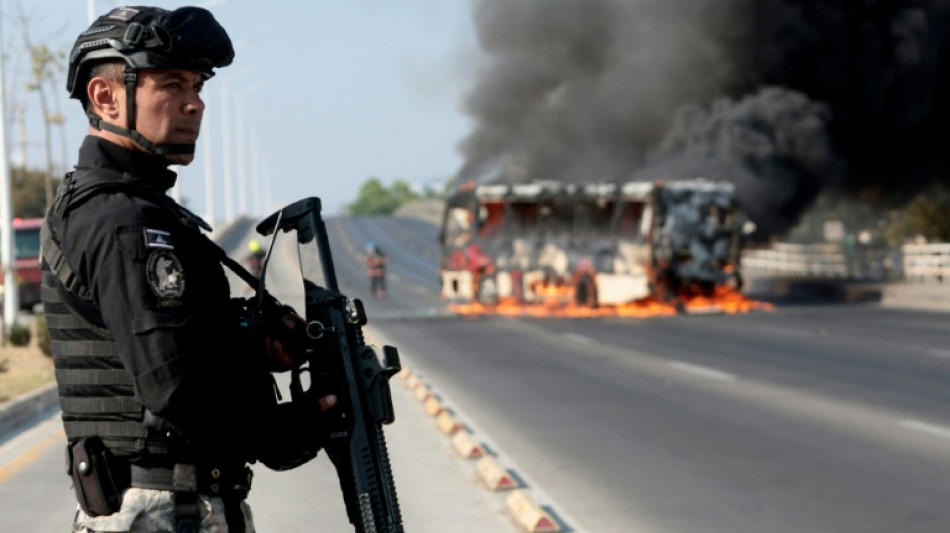
What the future holds for the CJNG cartel after leader killed / Photo: Ulises Ruiz - AFP
Violence swept across Mexico Sunday after the leader of the powerful Jalisco New Generation Cartel (CJNG), who had a $15 million US bounty on his head, was killed in a military shoot-out.
News of the death of Nemesio "El Mencho" Oseguera, 59, triggered cartel members across the country to block roads, torch vehicles and businesses and send fearful residents into hiding.
AFP looks at the sprawling power of CJNG and its future without "El Mencho" at the helm.
- What is CJNG? –
Oseguera is a founding member of CJNG, which was formed in 2009 and has grown into one of the most violent drug cartels in Mexico, ahead of the Sinaloa cartel.
The US State Department said that the cartel has the "highest cocaine, heroin, and methamphetamine trafficking capacity in Mexico," and over the past few years, has started to funnel fentanyl into the United States.
"It is certainly one of the most powerful organizations in Mexico in terms of military capacity, recruitment capability and weaponry," David Mora, an expert at the Crisis Group analysis center, told AFP.
Apart from drug trafficking, the CJNG's operation expanded into other criminal enterprises such as extortion, fuel theft and human trafficking, the US Drug Enforcement Administration (DEA) reported.
The CJNG is characterized by its "constant willingness to challenge the Mexican government," Mora said.
In a show of power, the cartel frequently releases images of its members showing off weapons and armored vehicles.
In 2020, the cartel was accused of the attempted assassination of Mexico's public security secretary Omar Garcia Harfuch, who at the time was serving as police chief in the capital.
Last year, it was also accused of killing Uruapan mayor Carlos Manzo, a known crusader against organized crime in Mexico.
Manzo's death sparked two days of youth-led demonstrations in November, with protesters setting fire to public buildings and clashing with police, resulting in over 100 injuries.
- Why did the cartel react so violently ? -
The reaction that followed Oseguera's death reflects the cartel's far-reaching power in Mexico, experts said.
Violence gripped the resort city of Puerto Vallarta, the state of Michoacan near the capital, and the states of Puebla, Guanajuato in central Mexico, Sinaloa in the northwest and south into Guerrero.
"What we saw today is just a demonstration of the places where (the cartel) operate and where they can spread violence," Mora said.
Security analyst Gerardo Rodriguez told AFP that authorities had anticipated a reaction, but did not expect such a "national reach."
Oseguera was wounded in a clash with soldiers in the town of Tapalpa, in Jalisco state, and died while being flown to Mexico City, the military said in a statement.
"In operational tactical terms, it is a very successful operation by the government," Rodriguez said.
- What is the future of the cartel? -
Oseguera is one of the biggest Mexican drug lords to be taken down since the capture of the founders of the Sinaloa cartel, Joaquin "El Chapo" Guzman and Ismael Zambada. Both are now serving time in the United States.
Meanwhile, Ruben "El Menchito" Oseguera Gonzalez, 35, Oseguera's son, was convicted by a federal jury in Washington in September of multiple drug trafficking and firearms charges.
Mora said that "in the absence of a direct succession, a power vacuum is created that opens the door to violent realignments within the organization."
It was the weakening of the Sinaloa cartel, for example, that led to CJNG's rise in prominence, experts noted.
The United States has classified CJNG as a terrorist organization and accuses it of sending cocaine, heroin, methamphetamine and fentanyl into the United States.
T.Duque--BT