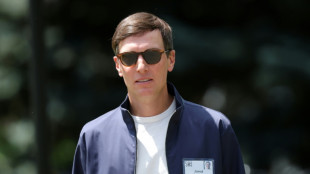
Opinions of Zuckerberg hang over social media addiction trial jury selection / Photo: DAVID GRAY - AFP

A jury has been confirmed in a landmark social media addiction trial in the US state of California, a process dominated by references to tech giant Meta's divisive founder Mark Zuckerberg.
Meta's lawyers fought for six days in court to remove jurors who they deemed overly hostile to Facebook and Instagram, two of the social media platforms involved in the case.
The plaintiff's lawyers sought to dismiss people, mostly men, who believed that young internet users' mental health issues are more attributable to parental failures rather than tech platform designers.
With the jury of 12 members and six alternates approved on Friday, arguments in the case are now scheduled to begin Monday in Los Angeles Superior Court.
The case is being called a bellwether proceeding because its outcome could set the tone for a tidal wave of similar litigation across the United States.
Defendants at the trial are Alphabet and Meta, the tech titans behind YouTube and Instagram. TikTok and Snapchat were also accused, but have since settled for an undisclosed amount.
The trial focuses on allegations that a 20-year-old woman identified by the initials K.G.M. suffered severe mental harm because she became addicted to social media as a child.
She accuses Meta and YouTube of knowingly designing addictive apps, to the detriment of her mental health.
- 'Start fairly' -
Jury selection was dominated by recurring references to Zuckerberg, the head of Meta and co-founder of Facebook who reached global fame after the Hollywood film "The Social Network."
"I feel impartial toward the plaintiff, but based on things Mark Zuckerberg has done objectively -- I have strong feelings about -- and I think the defendant would start further behind," said one young woman.
Many potential jurors criticized Facebook's early days -- it was designed as a platform for college students to rate women's looks -- and cited the Cambridge Analytica privacy breach of 2018.
They also said it would be difficult for them to accept the billionaire's testimony -- expected in the next two weeks -- without prejudice.
Meta's lawyer, Phyllis Jones, raised frequent objections to such jurors.
She said it was "very important that both sides start fairly, with no disadvantage, that you look at the evidence fairly and decide."
Others were dismissed for the opposite reason.
"I like this guy," said one rare Zuckerberg fan. "I regret not owning Meta shares."
He was dismissed by the plaintiff's lawyer, Mark Lanier.
Others to be removed included a man who expressed his anger against psychiatrists, and several people whose loved ones suffered from social media addiction or harassment.
- Seeking distance -
Alphabet's lawyers were keen to ensure that their platform YouTube was not lumped in with Meta.
"Does everybody understand that YouTube and Meta are very different companies? Does everyone understand that (Zuckerberg) doesn't run YouTube?" asked Luis Li, a lawyer for Google's video platform.
One man said he saw the potential for YouTube to seek to trigger "immediate dopamine" rushes among users through its "Shorts" feature.
He said his niece spends too much time on TikTok, which popularized a platform that provides endless scrolling of ultra-short-format videos.
The case will focus not on content, on which front platforms are largely protected by US law, but on the design of algorithms and personalization features.
The plaintiffs allege that the platforms are negligent and purposely designed to be harmful, echoing a strategy successfully used against the tobacco industry.
Meta and YouTube strongly deny the allegations, and also unsuccessfully argued on Friday for the judge to declare statements comparing their platforms to tobacco and other addictive products to be illegitimate.
The debate on the platform's level of responsibility for their effect on users was already underway, even at this early stage of the trial.
Alphabet's lawyer Li asked the panel if people spend too much time on phones, with the majority nodding in agreement.
"As a society, is it a problem?" he asked, with most hands again going up.
He then asked if this is "because of YouTube?" prompting hesitation from the jurors.
W.Cano--BT