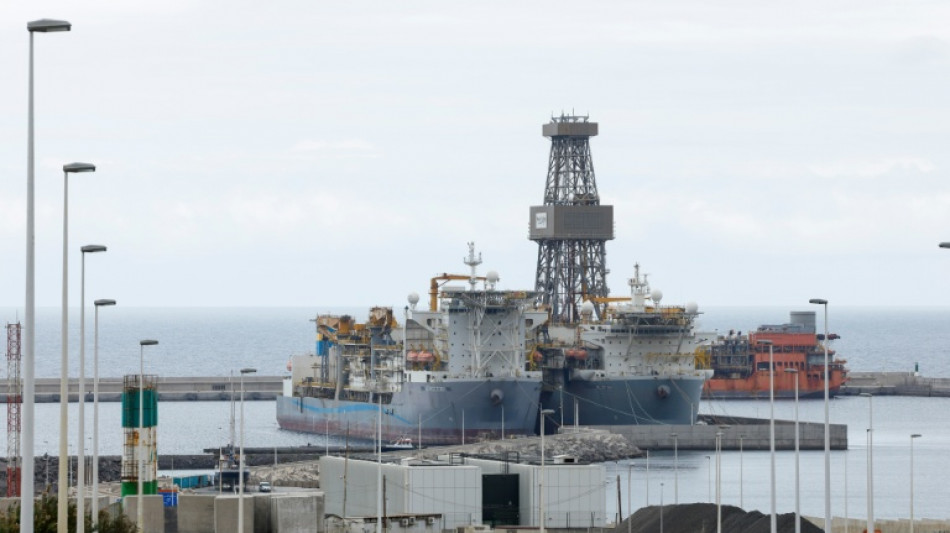
Covid flashbacks haunt Canary Islands as hantavirus ship nears / Photo: Oscar DEL POZO - AFP
Six years after registering Spain's first Covid case, the Canary Islands are awaiting the arrival of a cruise ship struck by a deadly hantavirus outbreak that is reviving painful memories.
"It was nothing, and then look what happened," retiree Marco Gonzalez told AFP on the island of Tenerife as he recalled early conversations about the pandemic that upended daily life in 2020.
The 74-year-old was enjoying his morning stroll on the coastal promenade in El Medano, close to where the MV Hondius vessel dominating the headlines is due to arrive this weekend.
The small industrial port of Granadilla hosts little commercial activity and is close to Tenerife South international airport, which will help the evacuation of the ship's crew and passengers.
The imminent arrival now dominates talk in the Atlantic archipelago, as three people from the vessel have died and another three have been evacuated for care in Europe.
"People are thinking about that, what happened five or six years ago," said Alicia Rodriguez, owner of an ice cream parlour in El Medano.
"We paid the consequences for two years," added the 57-year-old, whose popular business sells coffee and churros from the early morning and into the night, referring to the lockdowns imposed during the pandemic.
- 'Everyone is worried' -
The central government in Madrid says the ship's arrival poses no threat to public health or the economy in the picturesque islands, which rely heavily on tourism.
Insisting that hantavirus is not like Covid-19, the World Health Organization has also pointed to a low risk for public health worldwide after the outbreak of a rare version of the infection that is transmissible between humans.
Yet the regional government of the archipelago, located far from mainland Europe off northwestern Africa, has bristled at Madrid over the boat's reception, complaining about a lack of information and consultation.
Rodriguez said people "will try to do things in the least dangerous way possible, but everyone is livid".
For Cristo Alvarez, who was sipping his coffee in Rodriguez's ice cream parlour, "everyone is worried about what it (the ship) might bring".
But like most islanders who spoke with AFP, the 42-year-old butane gas distributor believed it was necessary "to help" the stricken passengers, who have been stuck for weeks in the Atlantic Ocean.
"They have to go somewhere," agreed Andy Robbins, 59, a British pensioner who has been living on Tenerife for a year.
His family in England "say to me 'stay safe, stay safe', but it's OK", Robbins said.
- 'Colonial' attitude -
The archipelago has often complained of a lack of solidarity from the rest of Spain and the European Union when faced with tens of thousands of irregular migrants arriving on its shores every year.
Local media have cited the arrival of the MV Hondius to again raise grievances about the treatment of the islands.
"Just as what happened with the handling of migration, the temptation to transform the Canaries into a physical, operational and logistical barricade for future outbreaks of infections and pandemics must not succeed," a columnist wrote in the daily Tenerife newspaper El Dia.
In the Diario de Avisos, another columnist slammed a "colonial" attitude towards the islands by Madrid.
Tourism is the economic lifeblood of the Canary Islands, which welcomed 18 million visitors last year, and El Medano is no different.
However, the potentially alarmist publicity around the MV Hondius has not scared away tourists, according to Mayte Gonzalez, 46, director of the Hotel Medano.
"The flow of reservations is normal for this time of year. Reservations have not stopped coming in, nor have we had more cancellations," she told AFP, expressing confidence that "it will all be fine".
C.Palacios--BT