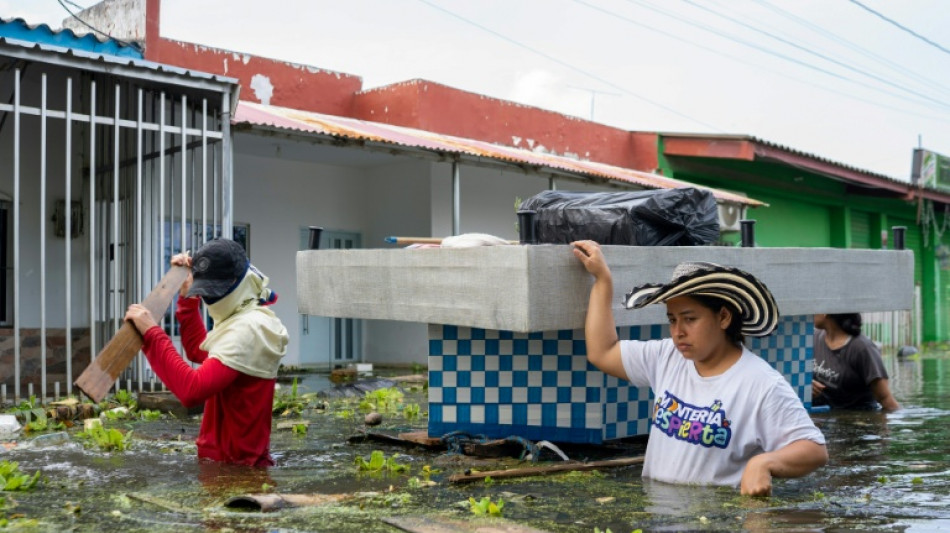
'We've lost everything': Colombia floods kill 22 / Photo: STRINGER - AFP

A rare spell of torrential rain has killed at least 22 people and left thousands of families displaced in Colombia's northern cattle belt, officials said Tuesday.
"We've lost everything, all our belongings" said Enid Gomez in Monteria, where residents waded through waist‑deep water.
"We had never been through anything like this before" she told AFP. "It always rained, but it was only a little. I mean, it wasn't like it is now."
Residents used motorboats and makeshift rafts to pull belongings from flooded homes as fields and pastureland vanished under water across Cordoba and Sucre departments.
The country's disaster management agency said 22 people were killed across four departments.
Officials in the departments of Cordoba and Sucre said more than 9,000 homes had been affected, while the UN Office for the Coordination of Humanitarian Affairs said over 27,000 families had been hit.
A cold front moving south from North America pushed rainfall 64 percent above average in January, the national weather agency Ideam said. Heavy rain is unusual at this time of year.
The floods have hit livestock hard. Local officials estimate over 5,500 animals have been affected. Many did not survive.
"Many animals were lost, as they ended up drowning," said Edwin Orozco, a resident of Lorica.
"The situation is critical," he said. "What's coming looks pretty serious."
Some schools suspended classes to turn classrooms into shelters for families forced from their homes.
Several of the flood's victims were in Narino department, where a rain‑swollen stream overflowed and buried several homes in mud, officials said.
Rescuers and sniffer dogs searched the debris.
Scientists say climate change is disrupting Colombia's wet and dry periods, making rainfall more erratic and increasing the risk of extreme weather events.
S.Cardona--BT