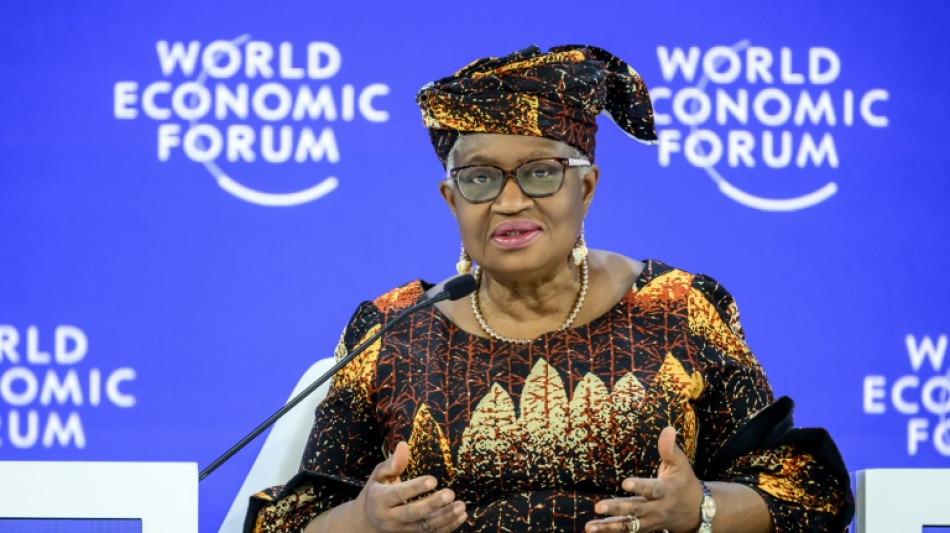
WTO chief urges China to shift on trade surplus / Photo: Fabrice COFFRINI - AFP
The head of the World Trade Organization on Friday urged China to change its growth model, arguing that its soaring trade surplus was ultimately unsustainable and risked sparking new trade barriers.
Beijing says it wants to support the multilateral trading system, "because it has benefited quite a bit from it", WTO chief Ngozi Okonjo-Iweala told the Munich Security Conference.
However, "the export-led growth model that drove China's growth for the past 40 years cannot drive China's growth for the next 40," said Okonjo-Iweala.
"And the $1.2 trillion trade surplus is not sustainable. Because the rest of the world cannot absorb it," she added.
"And if China does not act, we will see more barriers."
China's trade surplus hit a record $1.2 trillion last year. This was despite a sharp decline in its trade with the United States, as a fierce trade war between the world's two largest economies revived after President Donald Trump's return to the White House.
Other trade partners more than filled the gap, increasing Chinese exports overall by 5.5 percent in 2025, while imports stayed flat in dollar terms.
China's economy expanded five percent in 2025, Beijing said Monday, one of its slowest rates of growth in decades as the world's second-biggest economy struggled with persistently low consumer spending and a debt crisis in its property sector.
In October, Trump reached a truce with his Chinese counterpart, Xi Jinping. But in January, he announced that he would impose tariffs on countries trading with Iran. China, which is at the forefront of these countries, has warned that it will defend its interests.
Other major markets for Chinese products, such as the European Union, are alarmed by the imbalance in their trade balance with China.
Europeans, concerned that their markets will serve as an outlet for Chinese production surpluses, are urging China to stimulate its domestic consumption, which has been sluggish for years.
The WTO is holding its ministerial conference, its biennial main gathering, in late March in Cameroon.
G.Perez--BT