Latest developments in US, Israel strikes on Iran / Photo: - - UGC/AFP

The United States and Israel launched waves of strikes Saturday against targets in Iran, sparking swift retaliation by the Islamic republic which responded with missile attacks across the region.
Here are the latest developments as the military action announced by US President Donald Trump and the Israeli government sparked a flurry of salvos from Iran that closed airspaces around the Middle East.
- Strikes across Iran -
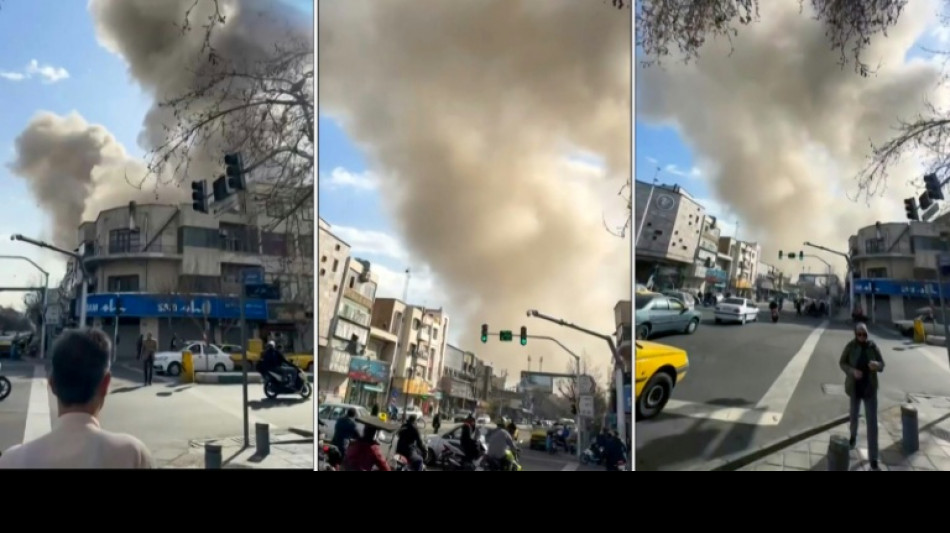
The joint operation began with smoke rising over Tehran after strikes that Israel said were pre-emptive.
Shortly after, Trump announced US combat operations against Iran, with the goal of "eliminating imminent threats".
Israel's military said it targeted multiple sites where senior Iranian officials had gathered in Tehran, and launched strikes against Iran's missile launchers.
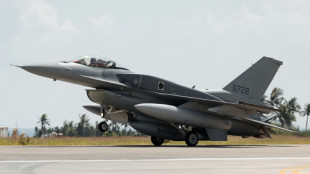
It said 200 fighter jets had taken part in the "extensive attack" on Iran, hitting more than 500 targets.
Prime Minister Benjamin Netanyahu said there were many signs Iran's supreme leader Ayatollah Ali Khamenei had been killed.
And Trump, asked by NBC News about a report of Khamenei's demise, told the broadcaster: "We feel that that is a correct story."
Two Israeli TV networks reported a photo of Khamenei's body had been shown to Trump and Netanyahu.
Israel's Channel 12 network reported that "30 bombs were dropped on" Khamenei's compound.
Witnesses said they heard cheers on Tehran's streets after reports of Khamenei's death.
In an NBC News interview, Iran's Foreign Minister Abbas Araghchi had earlier said Khamenei was alive, along with all high-ranking officials.
Netanyahu said the attacks killed senior Iranian officials and warned that thousands more targets would be struck in the coming days.
The Iranian judiciary's Mizan Online website said 108 people died in a strike on a girls school in Minab, citing a provincial official who blamed Israel.
- Missile, drone wave -
In response, Iran's Revolutionary Guards said they targeted the US Fifth Fleet in Bahrain and other American bases in the Gulf, after launching a first wave of missile and drone attacks at Israel.
Israel's Magen David Adom emergency service said it was treating a man with blast injuries in the north of the country, after missiles were launched from Iran.
The Israeli military said it deployed search and rescue teams to multiple locations across the country following reports of fallen projectiles.
Iran's top security official Ali Larijani vowed to "teach an unforgettable lesson" to the United States and Israel.
- Gulf explosions, strait closed -
Explosions were reported across the Gulf region.
The United Arab Emirates said it intercepted a second wave of Iranian strikes, after a first killed one civilian in Abu Dhabi.
Witnesses in Dubai said they heard an explosion and saw missiles streak across the sky, and witnesses told AFP they heard an explosion and saw smoke rising from the man-made island The Palm. Four people were injured.
AFP correspondents in the Saudi capital Riyadh heard loud explosions, as well as in Bahraini capital Manama and across Qatar's Doha.
Qatar's defence ministry said it had intercepted several missile attacks targeting the Gulf state.
A drone struck Kuwait's international airport and a base housing US personnel was targeted. Three Kuwaiti soldiers and 12 other people were wounded, authorities said.
Saudi Arabia condemned Iranian attacks targeting its neighbours, but made no mention of attacks on the kingdom.
Jordan said it had intercepted 13 ballistic missiles.
Explosions were also heard near the US consulate in Iraq's Erbil, according to AFP journalists.
Two people were killed in air strikes on an Iraqi military base housing the powerful pro-Iran group Kataeb Hezbollah, which threatened the US with a response.
Iran's Revolutionary Guards also moved to close the Strait of Hormuz, a vital waterway through which much of the world's oil and gas passes.
The Guards warned several ships the strait was "basically closed", the Tasnim news agency reported, with the EU's naval mission to the Red Sea confirming that vessels had received radio messages despite no formal closure order.
- Allied support, warnings -
French President Emmanuel Macron called for an urgent United Nations Security Council meeting over the escalation.
Oman's foreign minister, who has been mediating talks between Tehran and Washington, said he was "dismayed" by the violence.
Australian Prime Minister Anthony Albanese said Canberra supports the US action against Iran, while the UK expressed fear the military strikes could blow up into "a wider regional conflict".
The European Union said developments in Iran were "perilous".
Russia slammed the strikes as a "dangerous adventure" that could spark regional "catastrophe".
Pakistan condemned the "unwarranted attacks against Iran", and the Palestinian Islamist movement Hamas slammed the strikes on its backer.
Another Iranian ally, Lebanon's Hezbollah militant group, called on countries and people in the region to stand against Israel and the US.
- Airspace closures, flights nixed -
Qatar's civil aviation authority said the Gulf state's airspace had been temporarily closed. Iraq closed its airspace while Syria closed part of its airspace for 12 hours.
Russia cancelled commercial flights to both Iran and Israel "until further notice".
Air France cancelled its Tel Aviv and Beirut flights, while Lufthansa and Turkish Airlines were among several carriers that suspended flights to the region.
Israel closed Gaza's Rafah border crossing with Egypt on Saturday as a security measure.
T.Duque--BT