Sri Lanka troops to battle deadly dengue mosquitoes as cases rise / Photo: Nelson ALMEIDA - AFP

Sri Lanka is deploying the military to contain the spread of mosquito-borne dengue fever, as health authorities warned on Tuesday that hospitals are being overwhelmed with more than 1,000 admissions daily.
President Anura Kumara Dissanayake's office said army, navy and air force officers would join a special unit to identify and destroy mosquito breeding sites.
Dengue causes high fevers, headaches, nausea, vomiting, muscle pain and, in the most serious cases, bleeding that can lead to death.
Nearly 50,000 cases have been reported this year, with 29 deaths, although that is still far below the 2017 peak, when 186,000 patients and 440 deaths were reported.
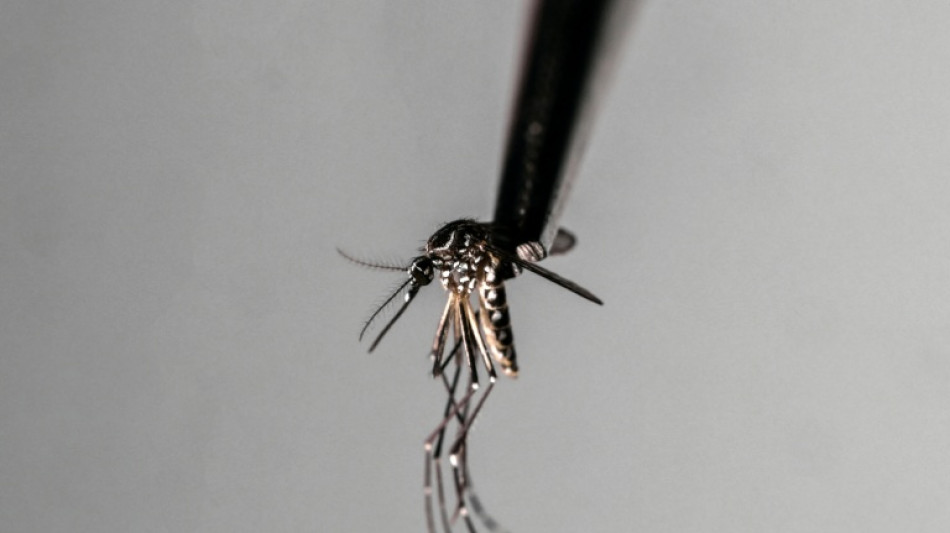
The Aedes mosquito that spreads dengue -- identifiable by its black and white striped legs -- breeds in stagnant pools.
"Laws will also be strictly enforced against those allowing mosquito breeding on their premises, in addition to setting up the special military unit," the statement said.
A nationwide campaign to clean up breeding sites will be launched on Wednesday.
The World Health Organization (WHO) has warned that dengue and other mosquito-borne viruses are spreading faster and further due to climate change.
Sri Lanka has seen a surge in dengue cases since the start of June, with more than 1,000 reported in a single day this week, according to official data.
The government's dengue unit said it feared state and private hospitals may not be able to handle a further increase.
"Hospitals are already under pressure," the head of the unit, Kapila Kannangara, told reporters in Colombo. "We don't want to have a situation like the one we faced in 2017."
Monsoon rains, stagnant water from recent flooding, and haphazardly dumped waste have created ideal conditions for the rapid spread of mosquitoes.
A.Garcia--BT