President Lee Reaffirms Push to Reclaim Wartime Operational Control from US

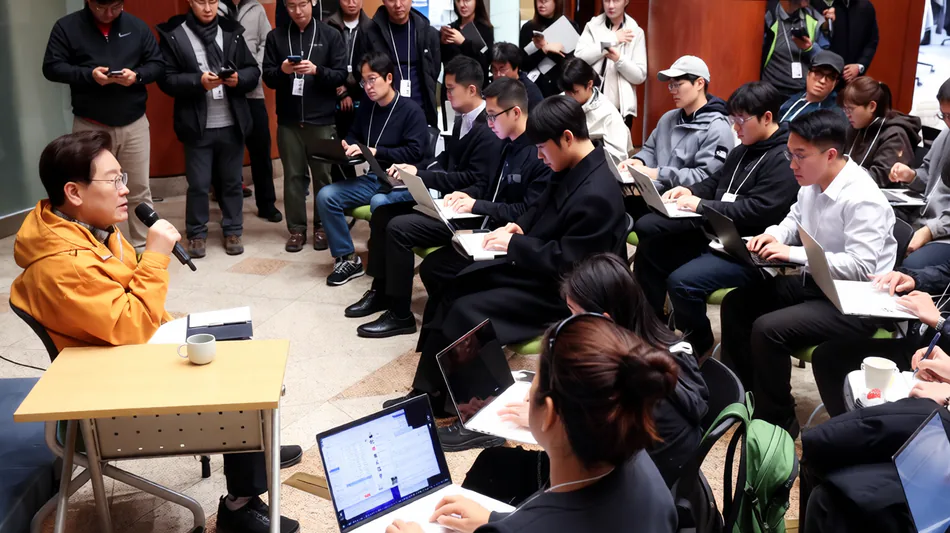
South Korean President Lee Jae Myung reaffirmed on Sunday his determination to reclaim wartime operational control (OPCON) from Washington at the earliest opportunity. Speaking during a press briefing, Lee asserted that Seoul is fully capable of defending itself and emphasized that the authority originally belonged to South Korea, even as he acknowledged the complexities of the transfer process.
South Korean President Lee Jae Myung reaffirmed on Sunday his commitment to reclaiming wartime operational control (OPCON) from the United States as soon as possible, stating that Seoul possesses the necessary capabilities to defend itself while negotiations continue regarding the timing of the transfer.
Lee made the remarks during a press briefing at Cheong Wa Dae in Seoul, which followed a hiking excursion with members of the presidential press corps. He emphasized that the term "reclaim" accurately reflected his position because the authority originally belonged to South Korea.
"By any objective measure, we are fully capable of defending ourselves, and we should do so," Lee said. "I believe we must reclaim full operational control at an early date, and that is what we are working to do."
The president acknowledged that the process is complicated, involving competing interests and various factors that must be considered. However, he pointed out that U.S. President Donald Trump and his administration have also urged South Korea to take greater responsibility for its own defense.
Seoul has sought to retake control by 2028, although some U.S. officials have claimed that the conditions for the transfer are unlikely to be met by that time. In arguing that South Korea could shoulder more responsibility, Lee described its military as the world’s fifth strongest and noted that its annual defense budget was approximately 1.5 times North Korea’s annual gross national product.
When asked whether his recent picks for foreign minister, unification minister, and other security posts favored less influence from the U.S. or closer alignment with Washington, Lee said what mattered was how well the nominees would serve the national interest.
"What difference does it make whether someone favors greater autonomy or puts the alliance first, as long as they look after our national interests?" he said, adding that each nominee’s first responsibility is to do the job well and help improve people’s lives.
Meanwhile, Lee was cautious about the prospect of playing golf with Trump on the occasion of next month’s Group of 20 summit in Miami. He speculated that the G20’s packed schedule would make it difficult to fit in a round of golf and cautioned against reading too much into working-level discussions.
G.Perez--BT