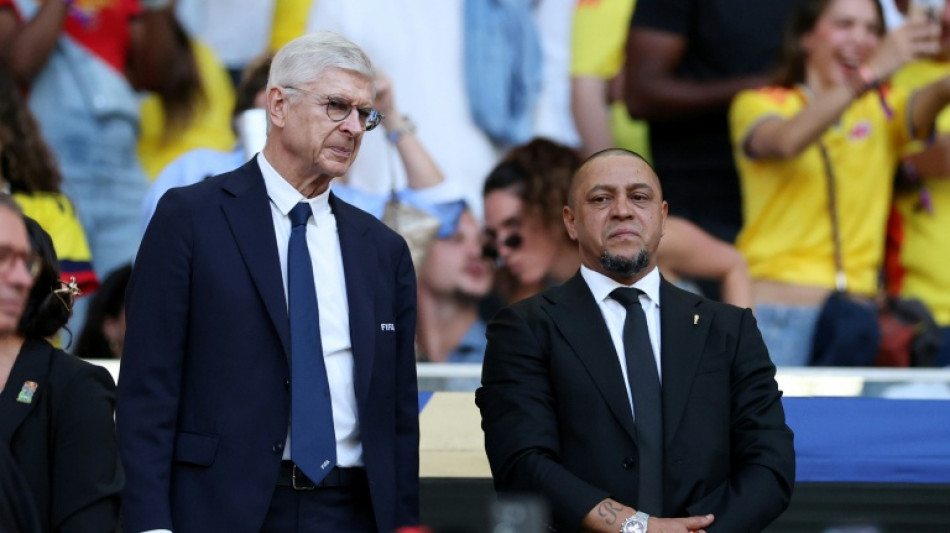
Wenger accepts World Cup hydration breaks split opinion / Photo: PATRICIA DE MELO MOREIRA - AFP/File

Arsene Wenger said Saturday he accepted that the hydration breaks used at this year's World Cup were not universally popular and said FIFA will assess whether to implement them in the same way in the future.
Wenger, FIFA's head of global football development, told a briefing on the eve of the World Cup final between Spain and Argentina: "Sometimes people didn't like it and we have to analyse after the World Cup what the impact was."
For this World Cup, FIFA brought in three-minute hydration breaks midway through each half -- regardless of the weather, even for matches played in cool conditions or under a closed roof.
It said the motivation for their introduction was a commitment to player welfare, but critics also saw it as a way to generate more income by selling advertising during the breaks in action.
"It didn't look to me that it changed the results, but we are here to serve people that watch football and we will come to conclusions afterwards," Wenger added.
"In many games, especially when the stadium was covered, people were not happy with it but at the start of the competition it was decided to do it for everybody."
Spain coach Luis de la Fuente defended the hydration breaks early in the tournament, citing the importance of player welfare in often hot conditions.
"It is difficult to sustain that level of physical exertion for long periods and I believe those breaks offer a brief respite to recharge and continue competing well," he said.
Meanwhile, former Arsenal manager Wenger insisted the expansion of the World Cup to feature 48 teams, up from 32 at the previous edition, had proven to be a success.
"It was questioned before it started but we found it was ethically needed to give a chance to more teams. I am convinced it was the right decision and it was a great success," he said.
T.Duque--BT