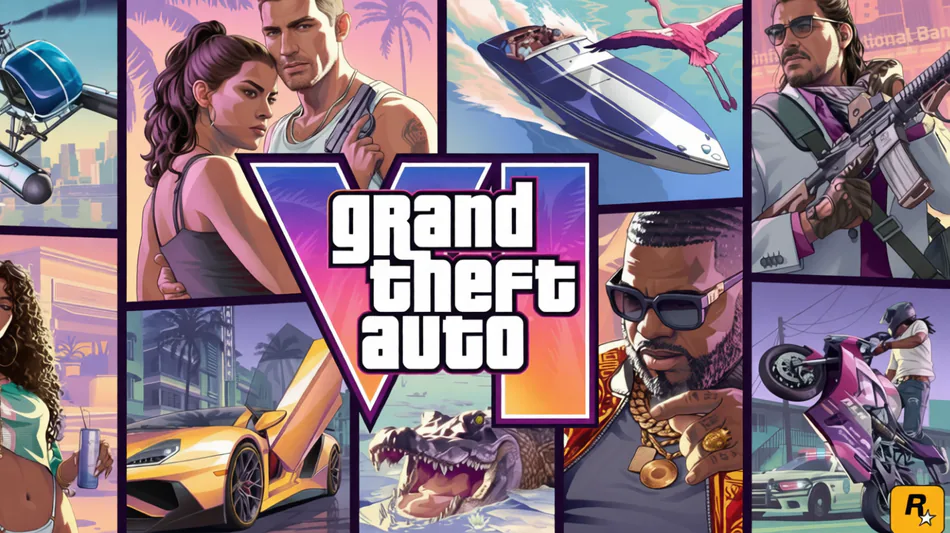
GTA 6 Review: A Technical Masterpiece With Lingering Franchise Flaws

Thirteen years after its predecessor, Grand Theft Auto VI has arrived as the most anticipated video game in history. GameCentral’s final review describes it as Rockstar Games’ technical masterpiece, highlighting incomparable visuals and an expansive open world, though it notes that core gameplay mechanics remain largely unchanged from previous entries.
Grand Theft Auto VI has arrived, fulfilling a thirteen-year anticipation cycle that has made it the most anticipated video game in history. In its final review, GameCentral describes the title as Rockstar Games’ technical masterpiece and arguably the best game the developer has ever produced, despite acknowledging that it retains many of the franchise’s longstanding mechanical flaws.
The review notes that while the timing of the publication is not ideal for breaking news, the consensus around the game has already solidified. GTA 6 currently holds the highest ranking ever recorded on Metacritic, positioning it as a contender for the title of best video game ever made. The review also addresses an attempted backlash against the game, which it characterizes as being driven by misogyny and contrariness, arguing that such criticism is absurd given the quality of the final product.
Set in the fictional U.S. state of Leonida, which is closely based on Florida, the game features the state capital of Vice City, modeled after Miami. Players control two protagonists: Jason Duval, a disgraced former soldier, and Lucia Caminos, a small-time criminal. The two are romantically linked, and players can switch between them at any time during the story, a mechanic similar to that used in Grand Theft Auto V.
The review highlights a notable shift in tone toward realism and storytelling compared to previous entries, although the basic formula remains consistent with the series’ roots dating back to 2001’s Grand Theft Auto III. While the overarching narrative is described as thin, it contains an intriguing mystery and a dizzying number of possible endings. Lucia is praised as a fun and versatile character, whereas Jason is criticized for being stoic, emotionally stunted, and less charismatic, resembling a duller version of Arthur Morgan from Red Dead Redemption 2.
Visually, the game is described as stunning, with graphics so detailed that they leave players in a "stupefied state." The review notes that the game runs on base PlayStation 5 hardware at 30 frames per second, occasionally dipping below that threshold during intense scenes. However, the reviewer argues this performance cost is justified by the impossibly detailed and gigantic open world.
Rockstar Games has significantly improved its presentation, integrating gameplay, graphics, and music in inventive ways that go beyond simply copying scenes from famous movies, a practice common twenty-five years ago. The review cites the first arrival in Vice City as jaw-dropping in spectacle, with a subsequent drug-fueled race through city streets serving as a memorable set piece where neon visuals pulse in time with the music.
One of the most praised moments is the end of Chapter 1, where Jason is drugged. The reviewer describes this sequence as an "absolute all-timer," combining a clever gimmick with a car chase finale that is both photorealistic and dreamlike. This segment demonstrates Rockstar’s ability to use stunning visuals to their fullest effect.
Despite these achievements, the review identifies several persistent issues within the franchise. The mission design has improved with endless variety and amazing spectacle, but as the scale ramps up in later chapters, some missions begin to feel increasingly on-rails. The core gameplay mechanics—driving, shooting, and melee combat—are described as better than before but ultimately unexceptional.
The review criticizes the heavy reliance on auto-aim in shooting, which results in almost every death ending in a headshot. While players can adjust these settings, the reviewer argues it should not be the player’s job to calibrate the game. Stealth is now a viable option in many situations, but the driving experience is described as surprisingly dull for much of the game.
A significant portion of gameplay involves driving long distances with passengers who talk incessantly. Because players cannot see their passengers while driving, they are forced to stare at the roof of the car, creating a disconnect between the audio and visual experience. The review notes that sensible driving is often the most advisable option due to the competence of police and angry road users.
GTA 6 reintroduces role-playing elements from Grand Theft Auto: San Andreas, including mundane tasks that players might prefer to avoid or pay others to do. Working out provides buffs to health and aiming but involves tedious minigames. The reviewer also criticizes the "talking car problem" and the fact that players spend more time looking at the minimap than the road.
The review compares the game’s pacing to Shenmue rather than the anarchic earlier GTA titles, noting that semi-interactive cutscenes with dumbed-down quick-time events contribute to this feeling. One story mission mocks indie walking simulation games, which the reviewer finds ironic given that GTA 6 often feels like one itself, inviting players to enjoy the vibes of driving down long, straight roads rather than engaging in substantial gameplay.
Despite these criticisms, the review concludes that the smooth parts outweigh the rough. The visuals and open world alone make it an essential purchase, with so many secrets and potential for emergent gameplay that the story’s flaws become less significant. The reviewer states that GTA 6 is easily the best game Rockstar has ever made, even though it leaves many long-standing flaws unaddressed.
The review acknowledges that Red Dead Redemption 2 was previously considered by many to be Rockstar’s masterwork but resents its influence on GTA 6, particularly regarding sticky on-foot controls and the obsession with simulating tedious everyday tasks. The reviewer also notes that there is not much actual "grand theft auto" in the game, as hotwiring a car now involves a minigame and getting caught carjacking carries more risks.
However, the increasing competence of police makes avoiding them more exciting, whether through stealth, disguise, or distractions. The primary appeal of GTA has always been its status as an "everything simulator," allowing players to do whatever they want. While this has never been entirely true, GTA 6 brings these elements together more successfully than before.
The review concludes that while the game is far from perfect, it is a stunning achievement in terms of both graphics and game design. After thirteen years and a budget in the billions, the reviewer argues that every penny is visible on screen in what is described as the most audacious and technically brilliant video game ever made.
In summary, GTA 6 is a technical masterpiece with notable improvements in action and mission design, but its obsession with realism is a double-edged sword. The pros include incomparably stunning visuals, an outstandingly huge open world, excellent story missions, and a great protagonist in Lucia. The cons include unremarkable gameplay innovation, dull driving, a strange obsession with mundane tasks, forgettable dialogue, and a boring male protagonist.
Grand Theft Auto VI is available on PlayStation 5 and Xbox Series X/S. It was published by Rockstar Games and developed by Rockstar Games. The game carries an age rating of 18.
D.Restrepo--BT